
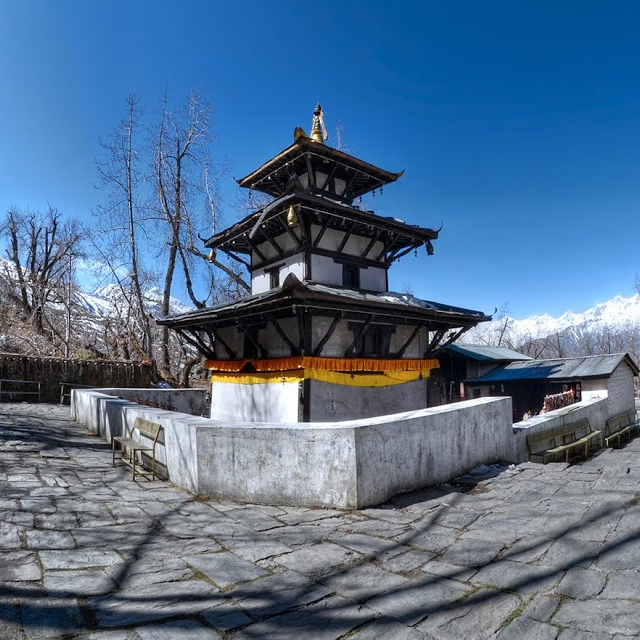
Muktinath, located in the Mustang district of Nepal, is a sacred site revered by both Hindus and Buddhists. Situated at an altitude of approximately 3,710 meters (12,172 feet) in the Himalayas, it is one of the most significant pilgrimage destinations in Nepal.
Key Highlights of Muktinath:
- Muktinath Temple:
- Religious Significance: For Hindus, Muktinath is one of the 108 Divya Desams (sacred temples) dedicated to Lord Vishnu. The name “Muktinath” means “Place of Salvation,” and it is believed that visiting this temple grants moksha (liberation) from the cycle of birth and death. For Buddhists, the temple is a place where the great sage Padmasambhava (Guru Rinpoche) meditated, and they associate the site with Avalokiteshvara, the Bodhisattva of Compassion.
- Architecture: The temple is small and built in the pagoda style, with a golden statue of Vishnu inside. It is surrounded by 108 water spouts (known as “Muktidhara”), where pilgrims take ritual baths.
- Jwala Mai Temple:
- Located near the Muktinath Temple, this temple is famous for its eternal flame, which is believed to be fed by natural gas. This flame is considered sacred by both Hindus and Buddhists.
- Scenic Beauty:
- Muktinath offers breathtaking views of the Annapurna and Dhaulagiri mountain ranges. The journey to Muktinath itself is a scenic experience, with views of rugged mountains, deep valleys, and rivers.
- Cultural Experience:
- The region around Muktinath is home to the Thakali people, known for their unique culture and hospitality. The local villages provide a glimpse into the traditional lifestyle and customs of the Himalayan people.
- Trekking Routes:
- Muktinath is a popular destination for trekkers, often included in the Annapurna Circuit trek. The trek to Muktinath can be challenging due to the high altitude, but it is also rewarding, offering stunning landscapes and cultural insights along the way.
- Accessibility:
- Muktinath can be reached by a combination of road and air travel. The nearest airport is in Jomsom, from where it takes about a day’s hike or a jeep ride to reach Muktinath. Alternatively, there are direct flights from Pokhara to Jomsom, followed by a trek or drive.
Best Time to Visit:
The best time to visit Muktinath is during the spring (March to May) and autumn (September to November) when the weather is stable, and the skies are clear. Winter can be very cold and the area may be covered in snow, making access difficult.
Practical Tips:
- Altitude Sickness: Given its high altitude, visitors should be mindful of altitude sickness. It’s advisable to acclimatize properly before making the final ascent to Muktinath.
- Accommodation: Basic lodges and guesthouses are available in and around Muktinath. In peak pilgrimage seasons, it’s advisable to book accommodation in advance.
- Permits: Visitors to Muktinath require permits, such as the Annapurna Conservation Area Permit (ACAP) and the Trekkers’ Information Management System (TIMS) card.
Muktinath is not just a religious site but also a place of natural beauty and cultural significance, offering a serene and spiritual experience amidst the grandeur of the Himalayas.